An accessible road trip around Ireland can be a wonderful way to explore the country at your own pace. You can stop beside a quiet Atlantic viewpoint, visit an Irish castle, take a break in a small town or change your plans when the weather turns.
However, accessible travel often requires more preparation than an ordinary weekend drive.
You may need accommodation confirmations, accessibility information, parking permits, vehicle documents, medical details and emergency contact numbers. Keeping all of these papers loose inside a car, backpack or wheelchair bag can quickly become frustrating.
A simple travel document organiser can help you keep everything together, protected and easy to reach.
It may not be the most exciting item on your packing list, but it could become one of the most useful products you take on an accessible road trip around Ireland.
What Is a Travel Document Organiser?
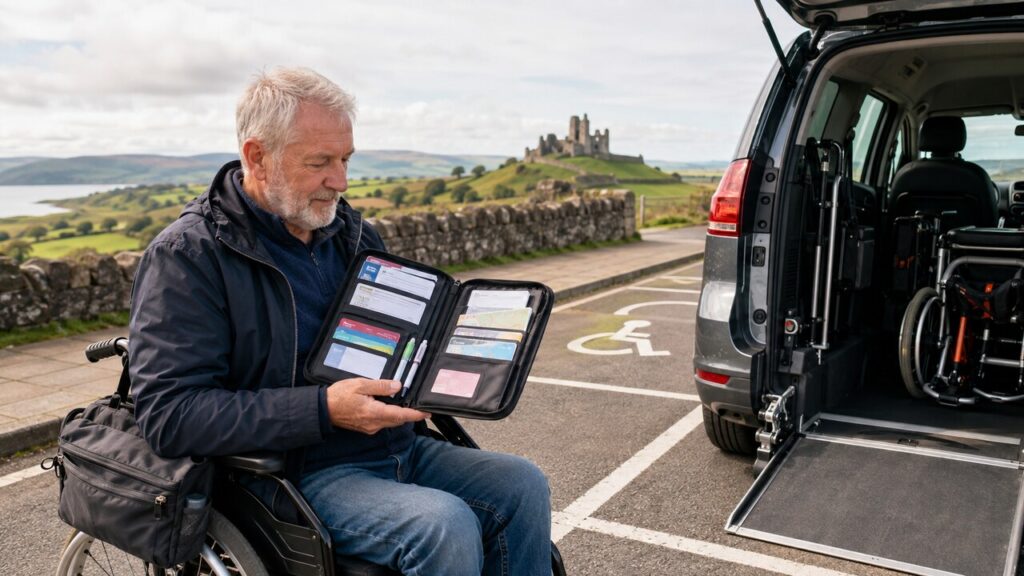
A travel document organiser is a compact folder or wallet designed to hold important documents in one place.
Depending on its size, it may include separate sections for:
- passports or identity documents;
- driving licences;
- ferry or flight confirmations;
- accommodation bookings;
- insurance information;
- parking permits;
- tickets and receipts;
- emergency contact details;
- cards, cash and spare keys.
Some organisers close with a zip, while others use a press stud, elastic strap or magnetic fastening.
For an accessible road trip, the best organiser is usually simple, lightweight and easy to open. It should not have complicated catches or tiny pockets that are difficult to use.
Why Accessible Travellers Often Carry More Information
Travellers with disabilities may need more than a booking reference and a bank card.
Before visiting a hotel, castle, museum or visitor attraction, you may have contacted the venue to ask about step-free access, accessible toilets, parking, doorway widths or lift availability. Keeping a printed copy of the reply can be useful, especially when the member of staff who answered your question is not present when you arrive.
You may also carry details about:
- wheelchair dimensions;
- mobility equipment;
- accessible hotel rooms;
- ferry assistance;
- adapted vehicle hire;
- medication;
- travel insurance;
- breakdown assistance;
- accessible taxis;
- local hospitals or pharmacies.
Transport for Ireland provides journey-planning information that can identify wheelchair-accessible stops and services. Nevertheless, accessibility may vary between individual routes, stations and vehicles, so keeping your own notes and confirmations together remains a sensible precaution.
It Keeps Your Disabled Parking Permit Safe
A disabled parking permit can be especially important during an accessible road trip.
Ireland’s Disabled Parking Scheme provides permits for people whose disability or permanent condition severely restricts their ability to walk. European parking cards are also intended to make it easier for eligible travellers to use designated accessible parking spaces when visiting other participating countries.
When the permit is not being displayed, it should be kept somewhere safe and flat. Leaving it loose on the dashboard can result in it becoming damaged, bent or lost beneath other items.
A travel document organiser gives the permit a designated place. You know exactly where it is when you arrive at a hotel, attraction, restaurant or accessible viewpoint.
Remember to display and use any parking permit according to the applicable conditions. It should only be used for the benefit of the person to whom it was issued.
Important Documents Are Easier to Reach
Imagine arriving at a ferry terminal or hotel reception and being asked for a booking confirmation.
Your documents could be:
- inside a suitcase in the boot;
- underneath a wheelchair cushion;
- mixed with restaurant receipts;
- saved somewhere in a crowded email inbox;
- spread between several bags.
A document organiser prevents this unnecessary search.
You can keep it in a consistent, accessible location, such as a side pocket of your wheelchair bag, the vehicle door compartment or a small bag beside the passenger seat.
For someone with limited movement, balance problems or reduced hand strength, avoiding repeated reaching and searching can make the journey noticeably easier.
It Provides a Backup When Technology Fails
Smartphones are extremely useful on a road trip. They provide navigation, booking confirmations, weather forecasts and contact details.
However, batteries run down. Mobile coverage can be unreliable in remote areas. Apps may log you out, and important information can be difficult to find quickly.
Carrying printed copies of your most important documents provides a practical backup.
You do not need to print every email. A small selection is usually enough:
- accommodation names and addresses;
- booking references;
- accessibility confirmations;
- ferry or transport details;
- insurance and breakdown numbers;
- emergency contacts;
- a basic route plan.
You can also keep digital copies on your phone while carrying the essential printed information in your organiser.
This combination gives you the convenience of technology without depending on it completely.
It Can Help During Unexpected Situations
Most road trips go according to plan, but delays and changes are always possible.
A ferry may be rescheduled. A hotel may have difficulty locating your booking. A wheelchair component may need repair. You may need to contact your insurer, vehicle hire company or breakdown provider.
During a stressful situation, searching through different bags and apps can make the problem feel worse.
A clearly organised folder allows you or your travelling companion to find the necessary information quickly.
Consider adding a simple emergency information card containing:
- your name;
- an emergency contact;
- relevant medical information;
- medication details;
- allergy information;
- your insurer’s telephone number;
- your accommodation address.
Only include information that you are comfortable carrying, and keep sensitive documents securely stored.
It Helps You Organise Each Stage of the Journey
A useful organiser does not need dozens of compartments. A few clearly defined sections may be more practical.
You could divide it into:
Travel
Keep ferry tickets, flight information, vehicle hire documents and route notes here.
Accommodation
Store hotel confirmations, addresses, check-in times and written accessibility information.
Vehicle
Use this section for your driving licence, insurance details, breakdown cover and adapted vehicle instructions.
Ireland recognises full driving licences from EU member states and certain other countries, but visitors should always check the rules applying to their own licence before travelling.
Accessibility
Keep your parking permit, wheelchair measurements, assistance confirmations and details of accessible facilities in this section.
Emergency Information
Store important telephone numbers and a brief emergency card where they can be found quickly.
What to Look for When Buying an Organiser
A good travel document organiser for an accessible road trip should be practical rather than fashionable.
Look for:
- a full zip opening;
- large, easy-to-hold zip pulls;
- clearly separated compartments;
- enough room for A5 papers folded once;
- water-resistant material;
- a lightweight design;
- a contrasting interior that makes documents easier to see;
- an external handle or wrist strap;
- RFID protection if you plan to store contactless cards or passports.
Avoid choosing an organiser simply because it contains the greatest number of pockets. Too many small sections can make documents harder to locate.
The best model is the one you can open comfortably and use independently.
Do Not Leave It Visible in an Unattended Vehicle
A document organiser may contain personal and valuable information. It should not be left visible on a seat or dashboard when you leave the vehicle.
Take it with you or secure it out of sight.
You may also decide to keep particularly sensitive documents, cash and cards in a separate personal wallet. The organiser can then hold confirmations, photocopies and practical travel information without containing everything valuable in one place.
A Small Product That Can Make Travel Calmer
Accessible road trips are usually easier when important items have a permanent place.
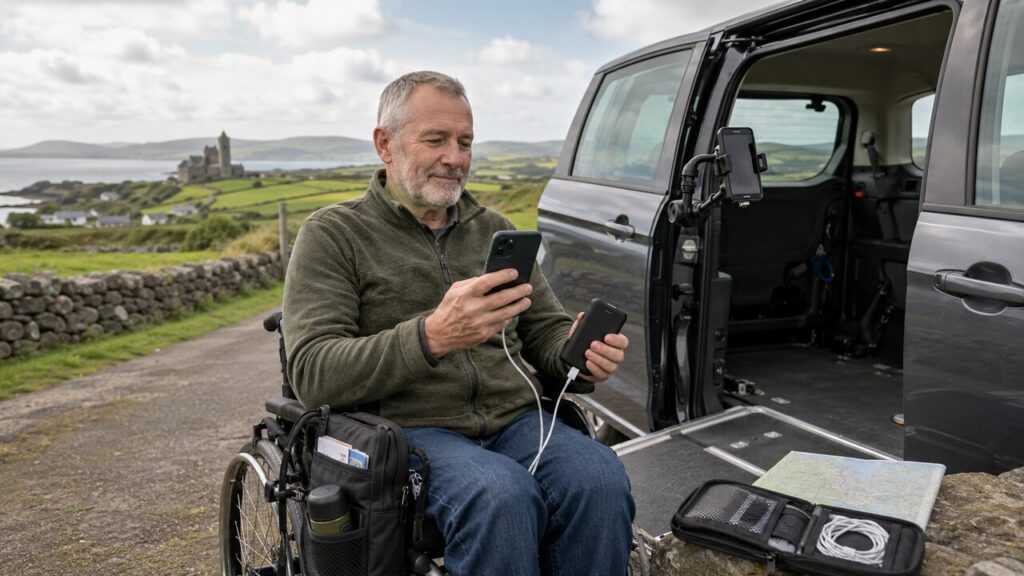
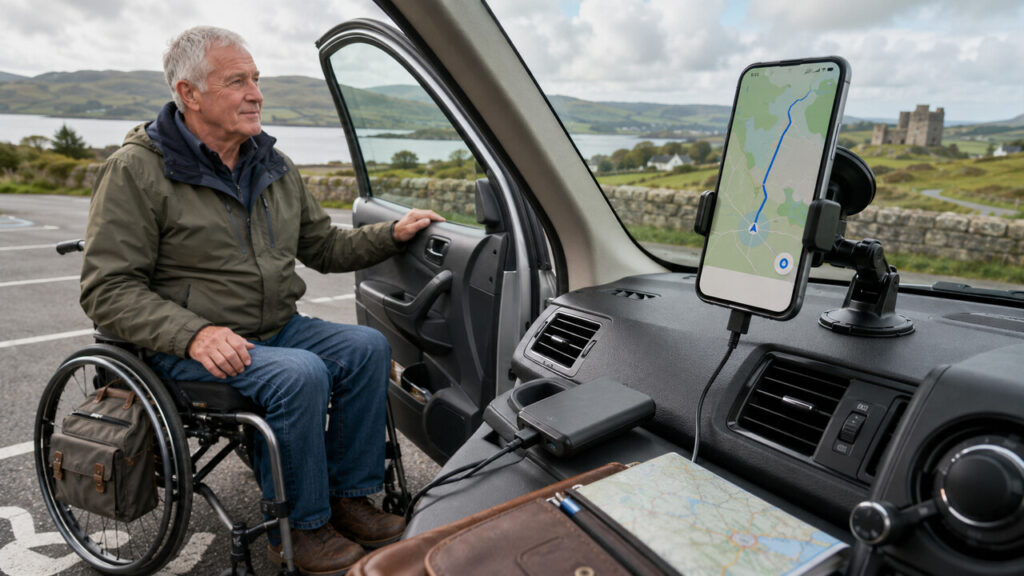
A smartphone mount keeps navigation visible. A power bank keeps essential devices charged. A travel document organiser keeps your plans, confirmations and emergency information together.
That means less searching, less reaching and less uncertainty.
During a road trip around Ireland, you may travel between busy cities, rural villages, historic attractions and remote coastal areas. Having your important information organised allows you to concentrate on the experience rather than worrying about where you placed the hotel confirmation or parking permit.
A travel document organiser will not remove every challenge from an accessible journey. However, it can make the trip calmer, safer and considerably more manageable.
For wheelchair users, disabled travellers and anyone planning a road trip after 50, that makes it a simple product worth considering.