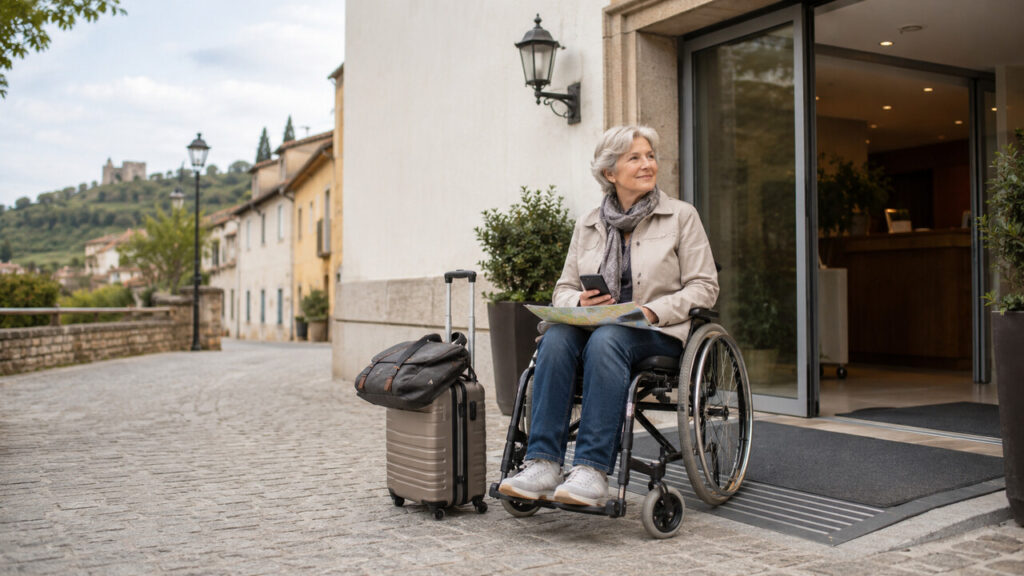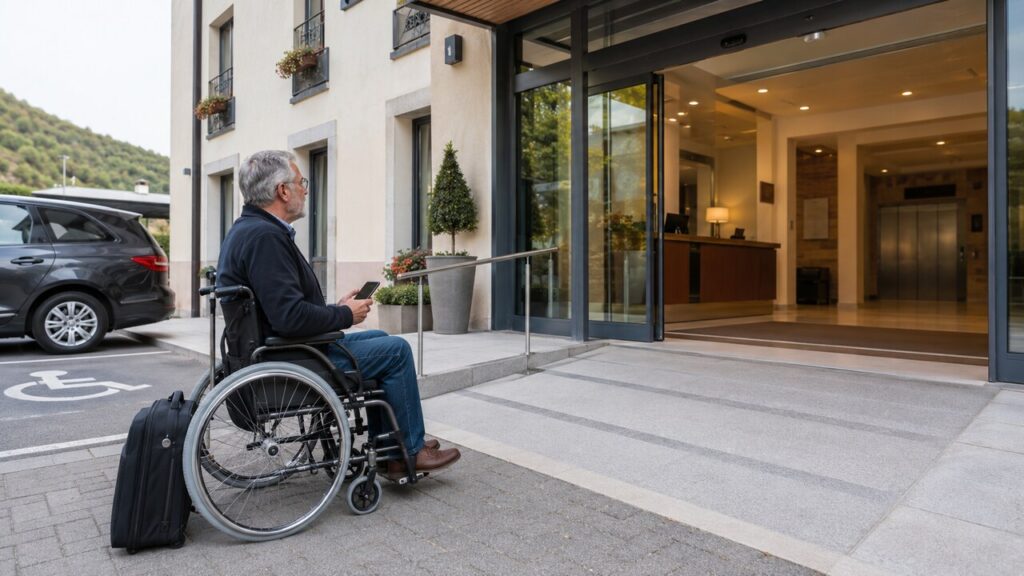
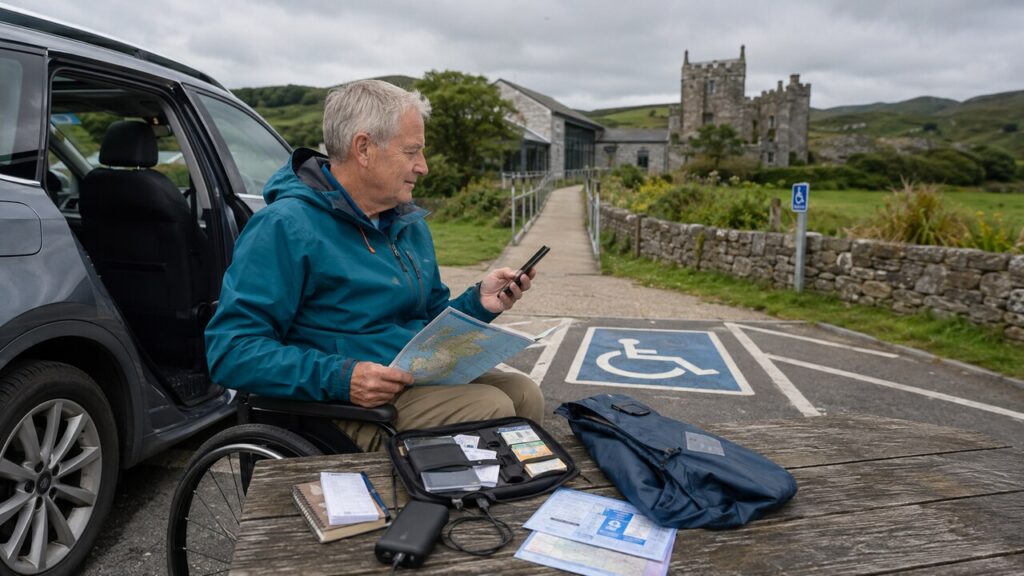
Ireland can be a wonderful destination for travellers with limited mobility or wheelchair users. From dramatic coastal roads and historic castles to welcoming towns and green countryside, there is plenty to discover.
However, an enjoyable accessible trip often depends less on how many places you visit and more on how well you prepare before leaving home.
The word “accessible” can mean very different things depending on the hotel, attraction, transport provider or restaurant. A place may have a ramp but no accessible toilet. A hotel may advertise an accessible room, yet the bathroom layout may not work for your particular wheelchair.
For that reason, it is worth checking a few practical details before travelling.
Here are the most important things to consider when planning accessible travel around Ireland.
1. Check Your Accommodation Carefully
Accommodation should be one of the first things you investigate.
Do not rely only on a booking website displaying the words “wheelchair accessible”. Try to find detailed information about the actual room and the route from the entrance to it.
Useful questions include:
- Is there step-free access from the car park?
- Are the entrance doors wide enough?
- Is there a lift if the room is upstairs?
- Is there enough space beside the bed for a wheelchair?
- Is the bathroom genuinely accessible?
- Is there a roll-in or level-access shower?
- Are grab rails available?
- Is there accessible parking close to the entrance?
Whenever possible, contact the accommodation directly.
Photos can also be extremely useful. Ask the hotel or guesthouse to send photographs of the entrance, bedroom and bathroom if the information online is unclear.
A five-minute check before booking can prevent a much bigger problem after arrival.
2. Plan How You Will Get Around
Your transport choice can have a major impact on your trip.
Ireland’s Transport for Ireland service provides accessibility information for buses, trains, trams and other public transport, and its Journey Planner can help travellers identify wheelchair-accessible services and stops.
In Dublin, Luas trams and their platforms are wheelchair accessible.
Bus accessibility can vary depending on the type of service. Bus Éireann city and town services use low-floor accessible buses, while some regional journeys require an accessible space to be arranged in advance. Transport for Ireland currently advises passengers using certain regional services to book at least 24 hours before travelling.
Train travellers should also check arrangements in advance because wheelchair spaces on trains are limited. Irish Rail specifies limits for the dimensions and weight of wheelchairs and mobility scooters it can accommodate.
If you prefer greater independence, travelling by car or a wheelchair-accessible vehicle can make exploring rural Ireland considerably easier.
Tourism Ireland also lists wheelchair-accessible vehicle and adapted-car hire among the options available to visitors.
3. Check Attractions Individually
Never assume that every tourist attraction will offer the same level of accessibility.
Ireland has historic castles, ruins, gardens, cliffs and heritage sites that were built hundreds of years before modern accessibility standards existed.
Some have been adapted extremely well.
Others may provide access only to certain sections.
Before visiting, check:
- accessible parking;
- step-free entrances;
- ramps or lifts;
- accessible toilets;
- wheelchair-friendly paths;
- surfaces such as gravel or cobblestones;
- steep slopes;
- accessible cafés or visitor centres.
It is particularly important to check castles and historic buildings individually.
A visitor centre might be fully accessible while an ancient tower or upper floor is not.
Calling ahead can therefore save both time and unnecessary frustration.
4. Think About Accessible Toilets
Accessible toilets are easy to overlook when planning an itinerary.
Yet knowing where suitable facilities are located can make travelling far more comfortable.
Before a long day trip, identify potential stops such as:
- visitor centres;
- shopping centres;
- larger service stations;
- museums;
- major tourist attractions;
- larger cafés and restaurants.
Do not wait until you urgently need a facility before starting to look for one.
When visiting rural areas, distances between suitable stops can be considerably greater than in Dublin, Cork, Galway or other cities.
Building toilet stops into the itinerary is a simple but useful piece of travel planning.
5. Check Accessible Parking
If you are exploring Ireland by car, parking deserves special attention.
Look for attractions and accommodation that provide designated accessible spaces close to the entrance.
But also consider what happens after you leave the vehicle.
A marked parking bay is not particularly useful if the route from it includes high kerbs, steps, deep gravel or a steep slope.
Ideally, check the entire route:
parking space → pavement → entrance → attraction
For wheelchair users who need additional room beside the vehicle for transfers or equipment, the width and position of the parking space can be equally important.
6. Prepare for Irish Weather
Irish weather can change surprisingly quickly.
Even a pleasant morning can turn into a wet and windy afternoon.
For wheelchair users, rain can be particularly inconvenient because wet clothing, wheelchair cushions and bags may take considerable time to dry.
A few useful items can make travelling easier:
- lightweight waterproof jacket;
- wheelchair rain cover;
- waterproof bag;
- warm layer of clothing;
- small towel;
- waterproof phone case;
- spare dry clothing for longer trips.
Do not allow rain to ruin your plans.
Instead, prepare for it.
That approach works rather well in Ireland.
7. Keep Your Phone Charged
Your smartphone may become one of your most useful travel tools.
You may use it for:
- navigation;
- hotel bookings;
- attraction information;
- weather forecasts;
- transport timetables;
- emergency contacts;
- restaurant searches;
- photography.
For road trips, a secure smartphone mount can make navigation easier, while a reliable power bank provides useful backup when charging opportunities are limited.
Transport for Ireland also provides live journey information through its TFI Live app.
Before leaving your accommodation each morning, check that both your phone and power bank are charged.
8. Keep Important Documents Together
Accessible travel often involves more paperwork than people expect.
Keeping documents in one organiser can make everything easier.
Consider carrying copies of:
- accommodation bookings;
- ferry or flight information;
- travel insurance;
- identification;
- driving licence;
- vehicle hire documents;
- emergency contacts;
- medication information if relevant;
- accessibility arrangements you have confirmed in advance.
You may also want digital copies stored securely on your phone.
If something goes wrong, having everything organised can save valuable time.
9. Do Not Overload Your Itinerary
Ireland can encourage you to plan too much.
A castle in the morning, coastal drive at lunchtime, another attraction in the afternoon and a restaurant several kilometres away in the evening may look perfectly reasonable on a map.
In reality, accessible travel can require additional time.
Finding parking, getting equipment out of the vehicle, navigating unfamiliar paths and locating accessible entrances all add minutes to your day.
Give yourself breathing room.
Two enjoyable places visited comfortably are often better than five attractions rushed through.
10. Have a Plan B
Finally, always keep an alternative option available.
Weather changes.
Lifts occasionally stop working.
A path may be temporarily closed.
An attraction may be busier than expected.
Your backup could be:
- an accessible museum;
- a nearby visitor centre;
- a scenic drive;
- an accessible café;
- another attraction in the same area.
A Plan B does not mean expecting problems.
It simply means that one small problem does not have to spoil the entire day.
Final Thoughts
Accessible travel around Ireland does not have to be complicated.
The key is to check the practical details before you arrive.
Confirm your accommodation, investigate transport, check attractions individually, locate accessible toilets and parking, prepare for changing weather and keep essential travel information with you.
Official Tourism Ireland accessibility information also recommends contacting accommodation, transport operators and attractions directly when specific accessibility arrangements are important.
Most importantly, remember that accessible travel is still travel.
The purpose of all this preparation is not to create a long list of restrictions.
It is to give you more freedom once the journey begins.
With a little planning, Ireland’s castles, coastal roads, historic towns and spectacular landscapes can become part of a memorable and enjoyable accessible adventure.